


Introduction
November 26, 2008, remains one of the darkest days in India’s history. Mumbai witnessed coordinated terrorist attacks that continued for nearly 60 hours, killing 166 people and injuring hundreds. The attacks exposed major security weaknesses and became a turning point in India’s counterterrorism strategy.
How the Attacks Began
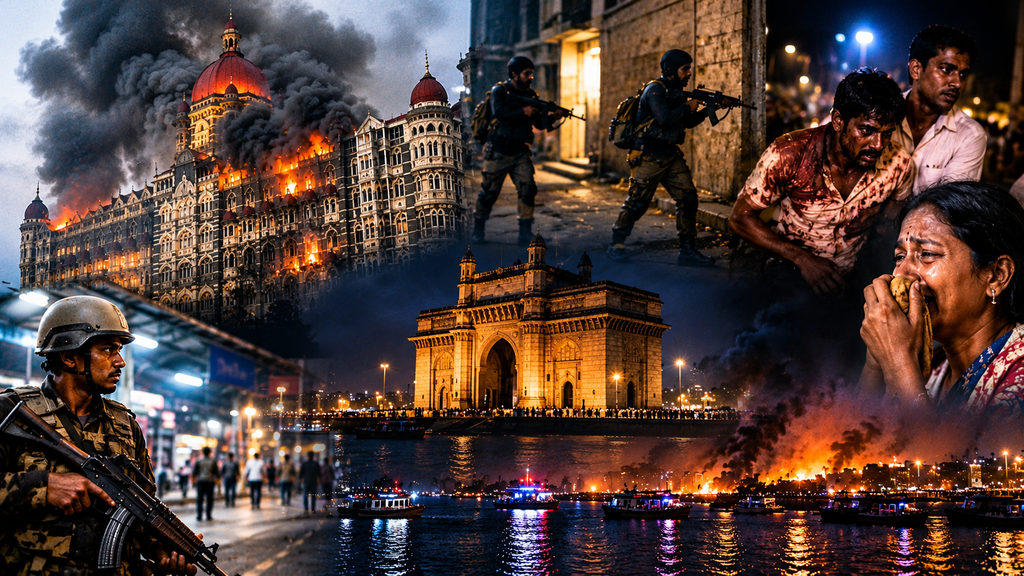
Ten terrorists associated with Pakistan-based Lashkar-e-Taiba arrived in Mumbai by sea and launched attacks at multiple locations. Their targets included Chhatrapati Shivaji Terminus, the Taj Mahal Palace Hotel, the Oberoi-Trident Hotel, Leopold Café and Nariman House.
The coordinated assault created widespread panic as gunfire, explosions and hostage situations unfolded across the city.
Response by Security Forces
Mumbai Police officers, the Indian Army, Navy commandos and National Security Guard (NSG) personnel took part in the operations. Several brave officers, including Hemant Karkare, Ashok Kamte and Vijay Salaskar, lost their lives while protecting civilians.
Constable Tukaram Omble played a crucial role in capturing terrorist Ajmal Kasab alive. The final operation at the Taj Mahal Palace Hotel ended on November 29, 2008.
Investigation and Justice
Ajmal Kasab was convicted for his role in the attacks and executed on November 21, 2012. Investigations continued to pursue other individuals accused of planning and supporting the operation. In April 2025, Tahawwur Hussain Rana was extradited from the United States to India in connection with the case.
Security Changes After 26/11
The attacks led India to strengthen coastal security, improve intelligence coordination and enhance counterterrorism preparedness. The National Investigation Agency (NIA) was established in December 2008, while NSG regional hubs were introduced to improve emergency response times.
Conclusion
The 26/11 attacks remain a painful reminder of the human cost of terrorism. The tragedy claimed innocent lives and left lasting scars on survivors and families. Remembering the victims and honouring the courage of security personnel reinforces the importance of vigilance, effective intelligence sharing and protecting civilians from future threats.
