
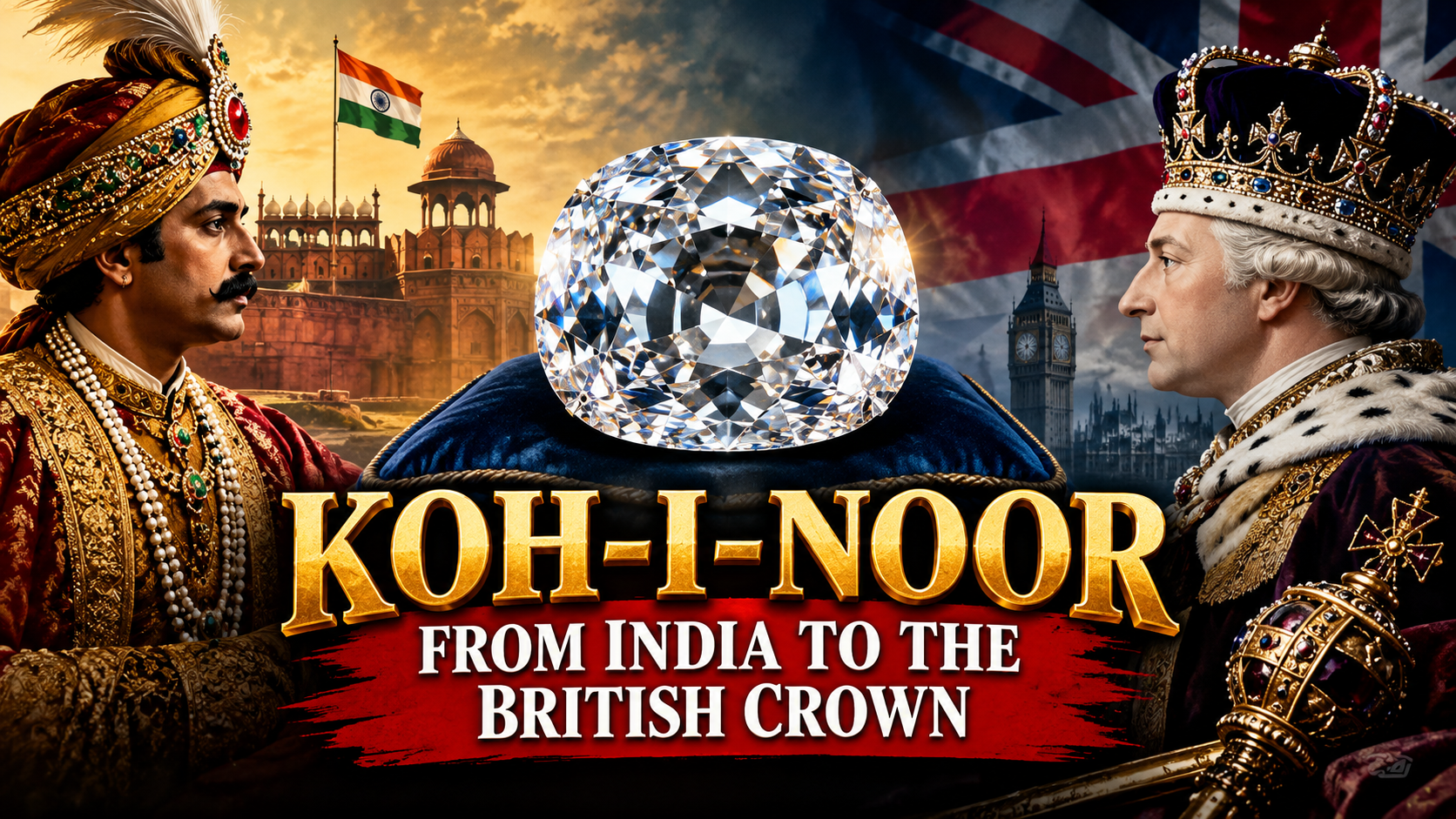

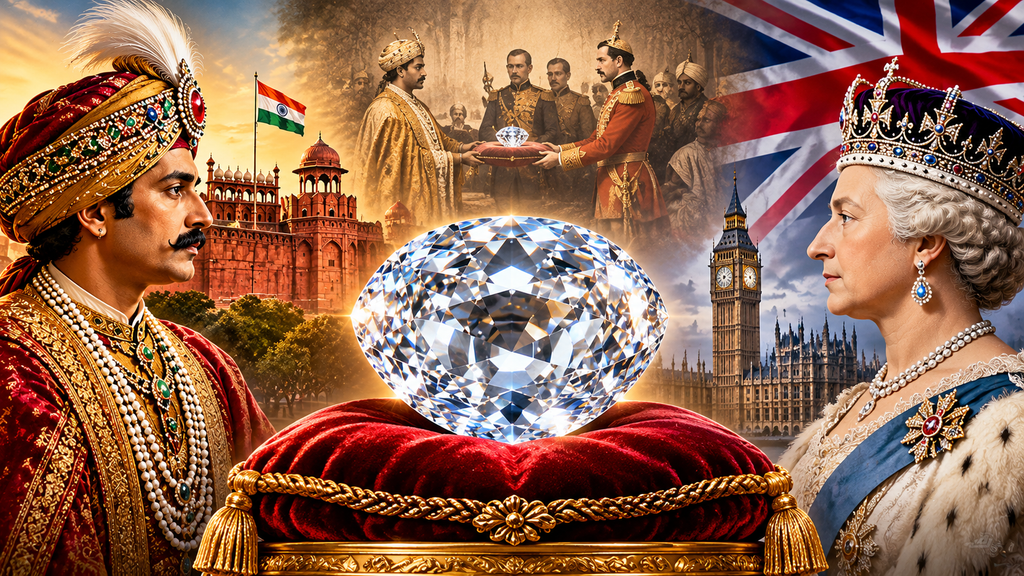
The Koh-i-Noor, meaning “Mountain of Light” in Persian, is one of the world’s most famous and controversial diamonds. Believed to have originated in India, the diamond has passed through the hands of powerful rulers and witnessed the rise and fall of empires.
The diamond became associated with the Mughal Empire before passing through the hands of Persian and Sikh rulers. Maharaja Ranjit Singh, founder of the Sikh Empire, possessed the diamond during the nineteenth century.
In 1849, following the British annexation of Punjab, the Koh-i-Noor was surrendered to the British Crown under the Treaty of Lahore. It was presented to Queen Victoria in 1850 and later recut to enhance its brilliance, reducing its weight to approximately 105.6 carats.
Today, the Koh-i-Noor forms part of the British Crown Jewels. However, its ownership remains controversial, with India and others raising claims for its return.
The Koh-i-Noor is more than a precious gemstone; it represents centuries of royal power, conquest and colonial history. Its story continues to spark debate about cultural heritage and the ownership of historical treasures.
